
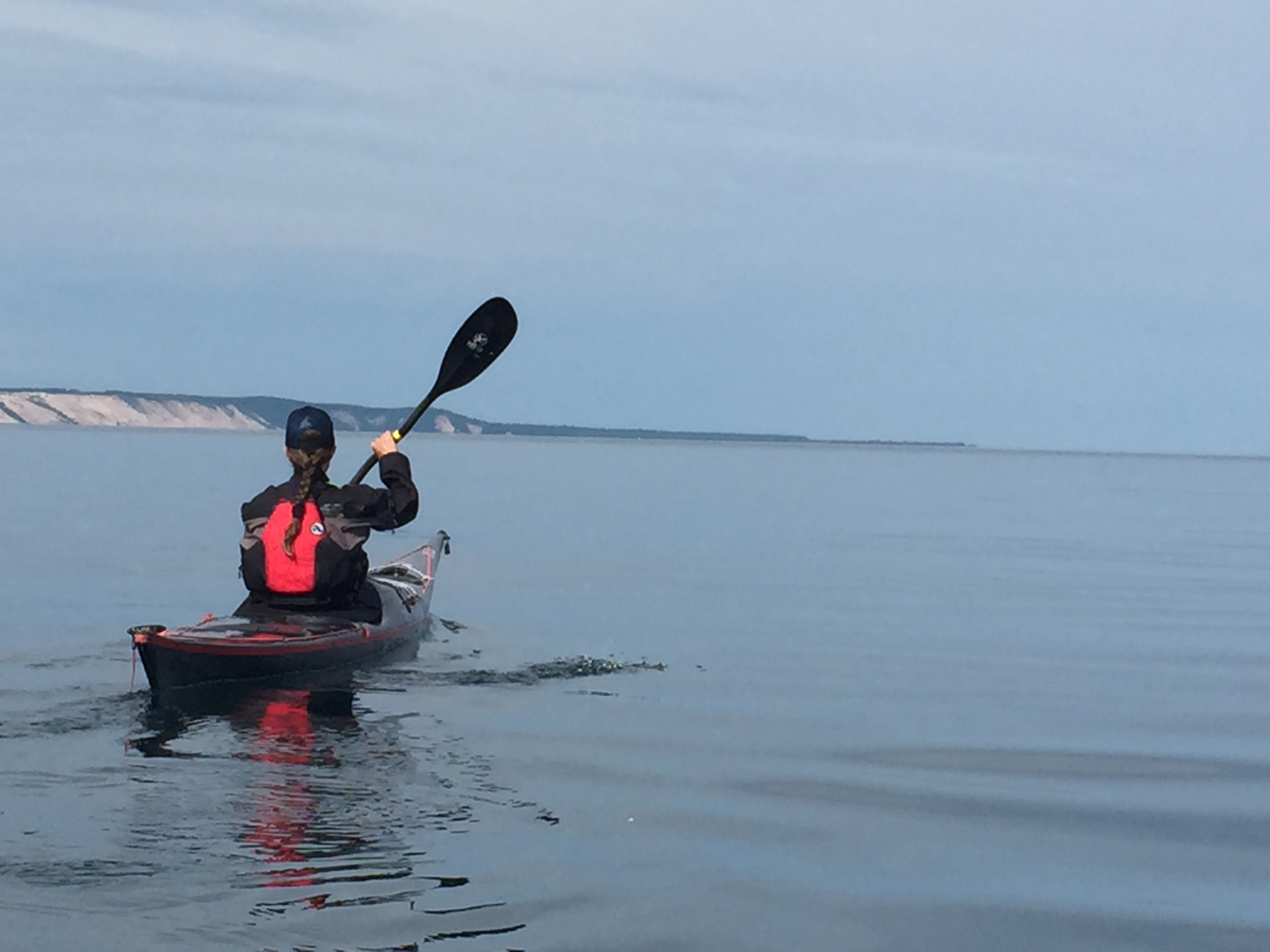
This article was first published in Paddling Magazine Issue 58.
[UPDATED: with new thoughts on how bent shaft paddles impact a neutral wrist position.]
The first time somebody put a kayak paddle in my hand was almost 30 years ago. The paddle was 230cm long and feathered at 80 degrees for right hand control. My paddling mentor gave me a simple set of instructions: line up your knuckles here, when you want to take a stroke on the left, twist your wrist back and put the paddle in the water.
I got started with a feathered kayak paddle because that’s what everyone around me was using, but it wasn’t long before I realized that there were a whole bunch of people who thought unfeathered paddles were the way to go. I wanted to know who was right.
In search of the answer I dove into the available resources. I read John Dowd’s book, Derek Hutchinson’s, and Nigel Foster’s. I dug into obscure magazine articles. I even carved a Greenland style paddle and used it until I felt I had the hang of traditional sea kayaking.
By the late-nineties I had set aside the Greenland paddle and started whitewater kayaking. I saw whitewater as a way to improve my rough water sea kayak skills, and since whitewater paddles were feathered I figured it was sensible to standardize my equipment. I switched to shorter touring paddles and used an 80 degree feather on everything. I was firmly convinced that feathered paddles were the way to go.
I had to be dragged kicking and screaming away from my 80 degree paddles, but dragged I was. The first challenge came in sea kayak paddles, when my favorite paddle manufacturer switched their standard feather angle to 60 degrees. The lower angle was said to be easier on the wrists and was still effective in a headwind. I didn’t have much choice, so I made the switch.
Whitewater came next. When I broke my favorite 60 degree whitewater paddle, the manufacturer told me that they could replace it with a 45, but not a 60. Forty-five, apparently, was easier on the wrists and most whitewater paddlers had switched over. As the trend went, I went, and shifted down to 45.
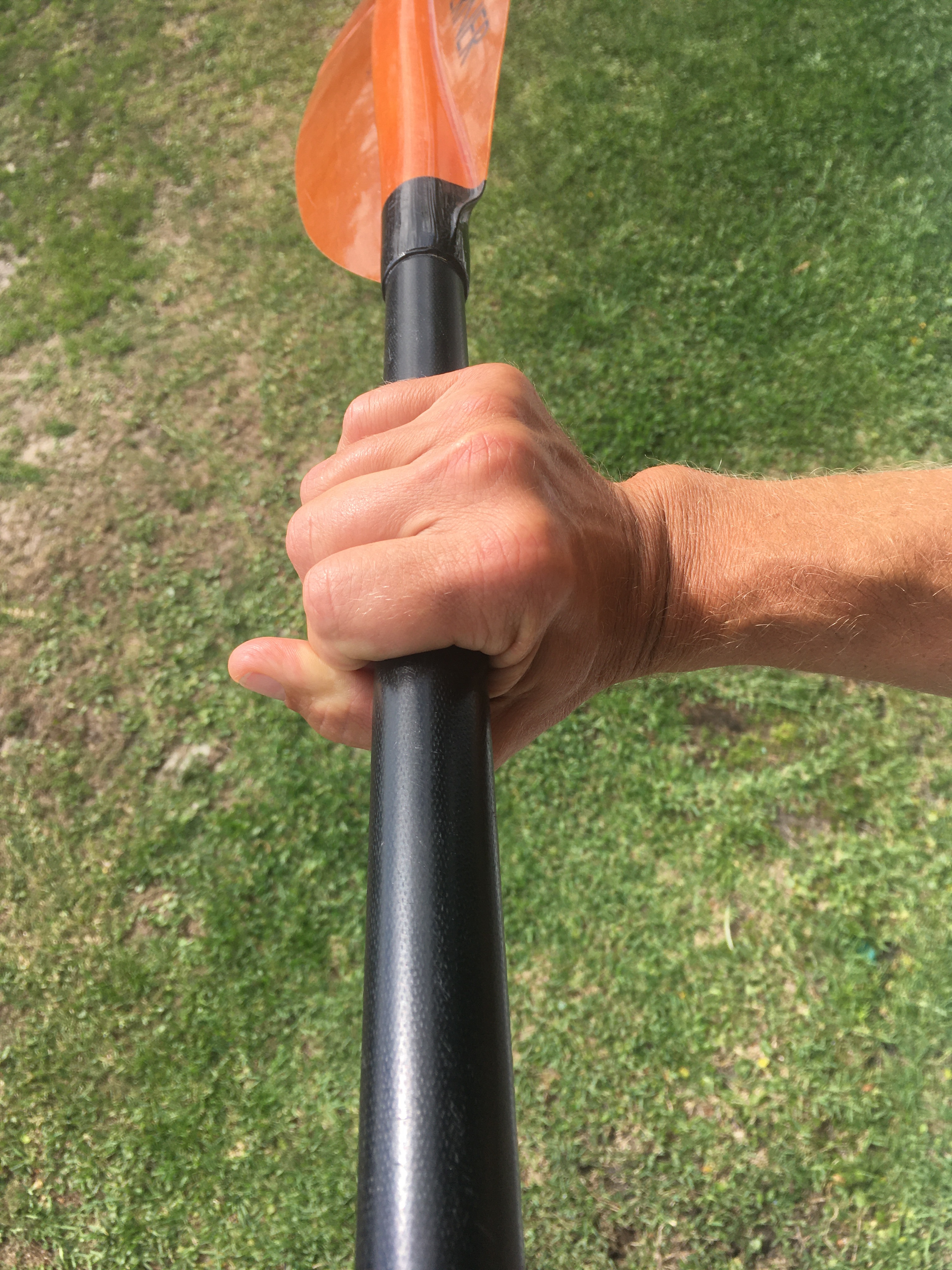
At 45 degrees I noticed a strange thing. I no longer had to twist my wrist to change the angle of the blade on the left side. In fact, as soon as I raised my right hand up to my shoulder the left paddle blade automatically squared itself to the boat, ready for a forward stroke. My top hand had a completely straight wrist.
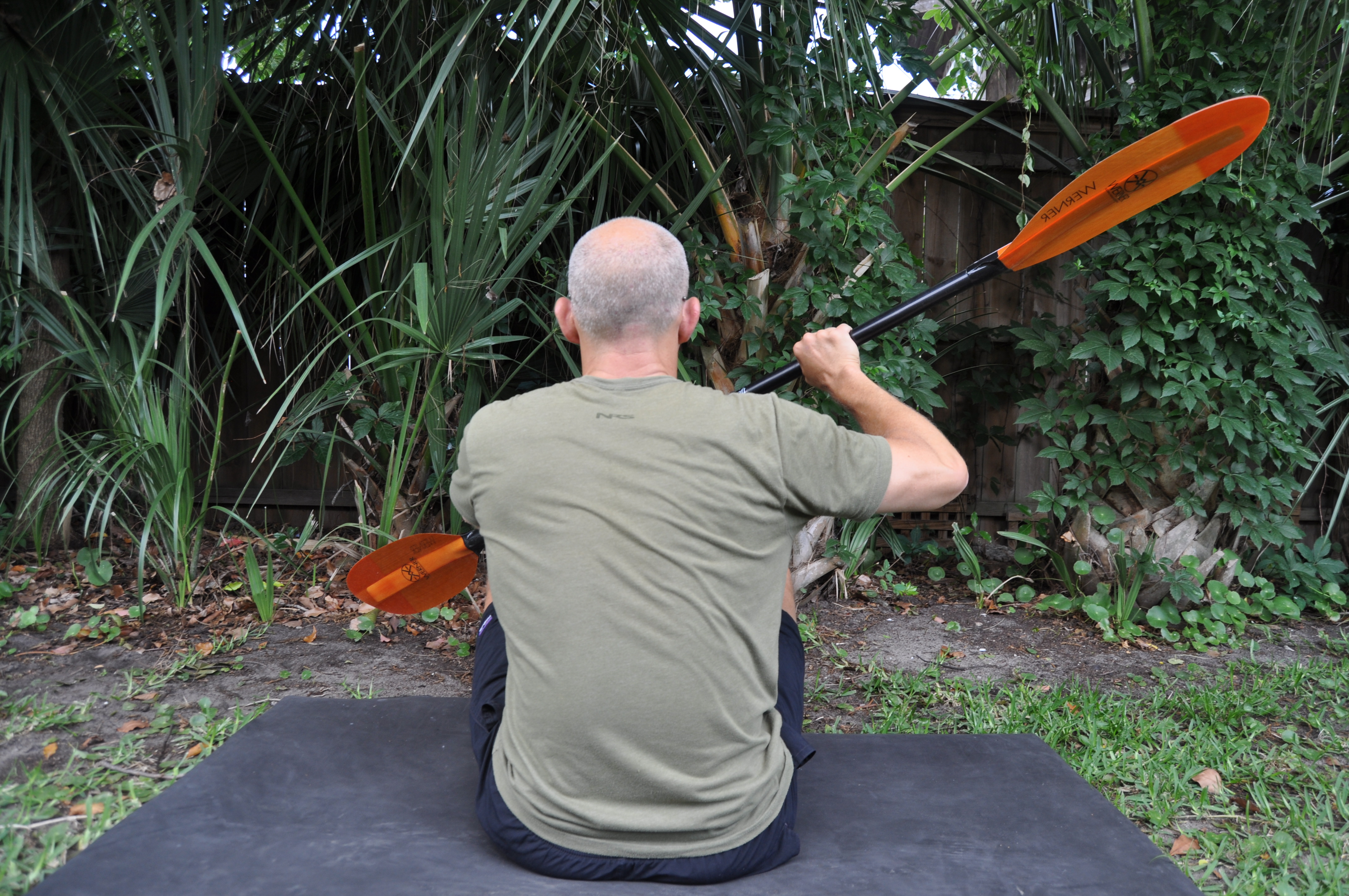
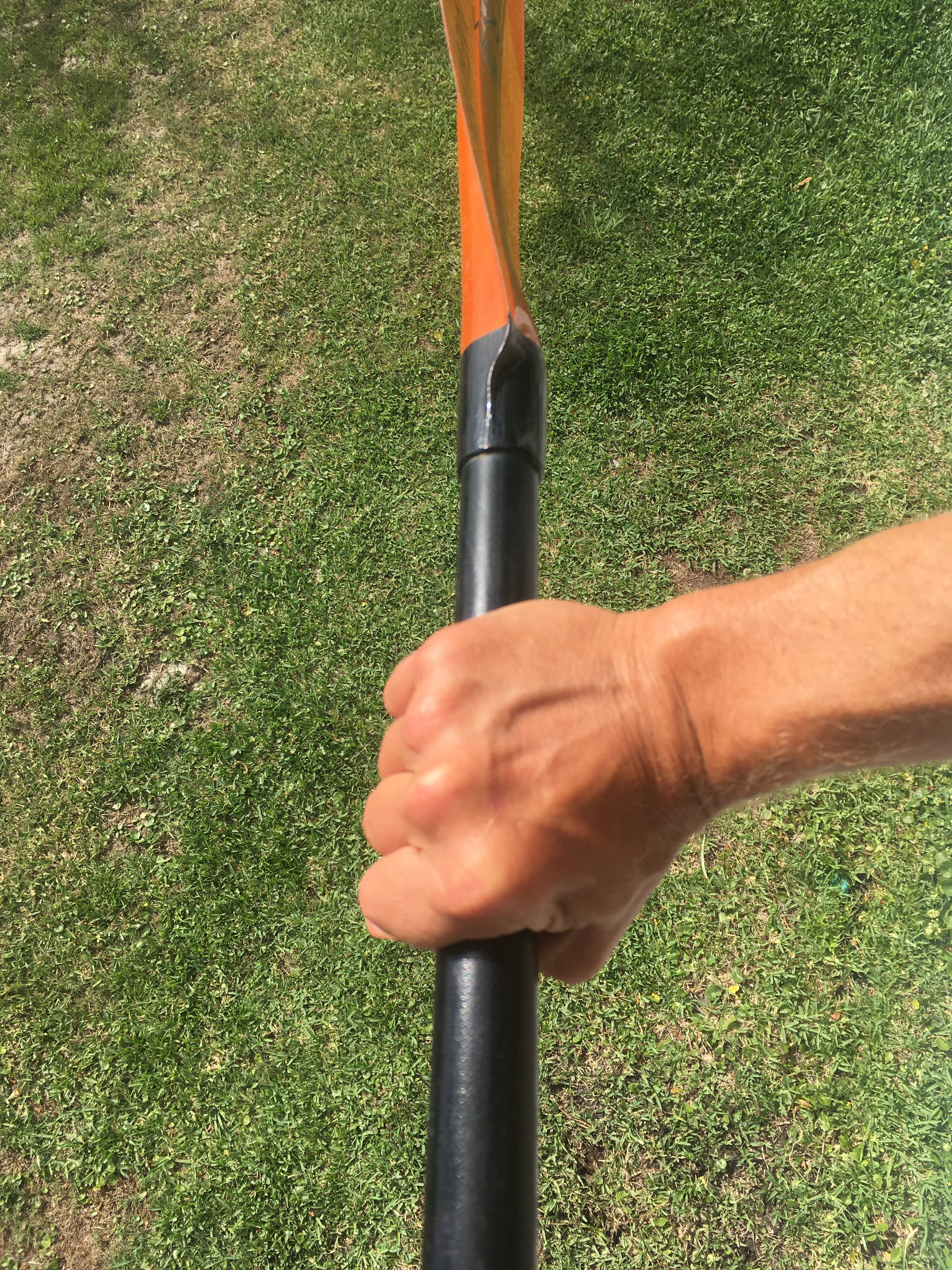
I had quite a bit of wrist pain in my early touring years, and it completely disappeared by the time I had eased my way down to 45 degrees. As far as I could tell it was twisting my wrist over and over that was giving me trouble, and the 45 degree paddle eliminated that motion.
With the pain gone I started to reevaluate what I wanted in feather angle. Instead of performance in a headwind I decided wanted something that would keep me paddling without pain. I knew that 45 was better than 60, so, less was better. But how much less? I tried some whitewater paddles down to 30 degrees. They were just as neutral on my wrists as the 45 degree feather. Twenty years into my quest to understand feather angle I started to wonder if maybe unfeathered paddles really were the answer.
The answer, it turns out, is no.
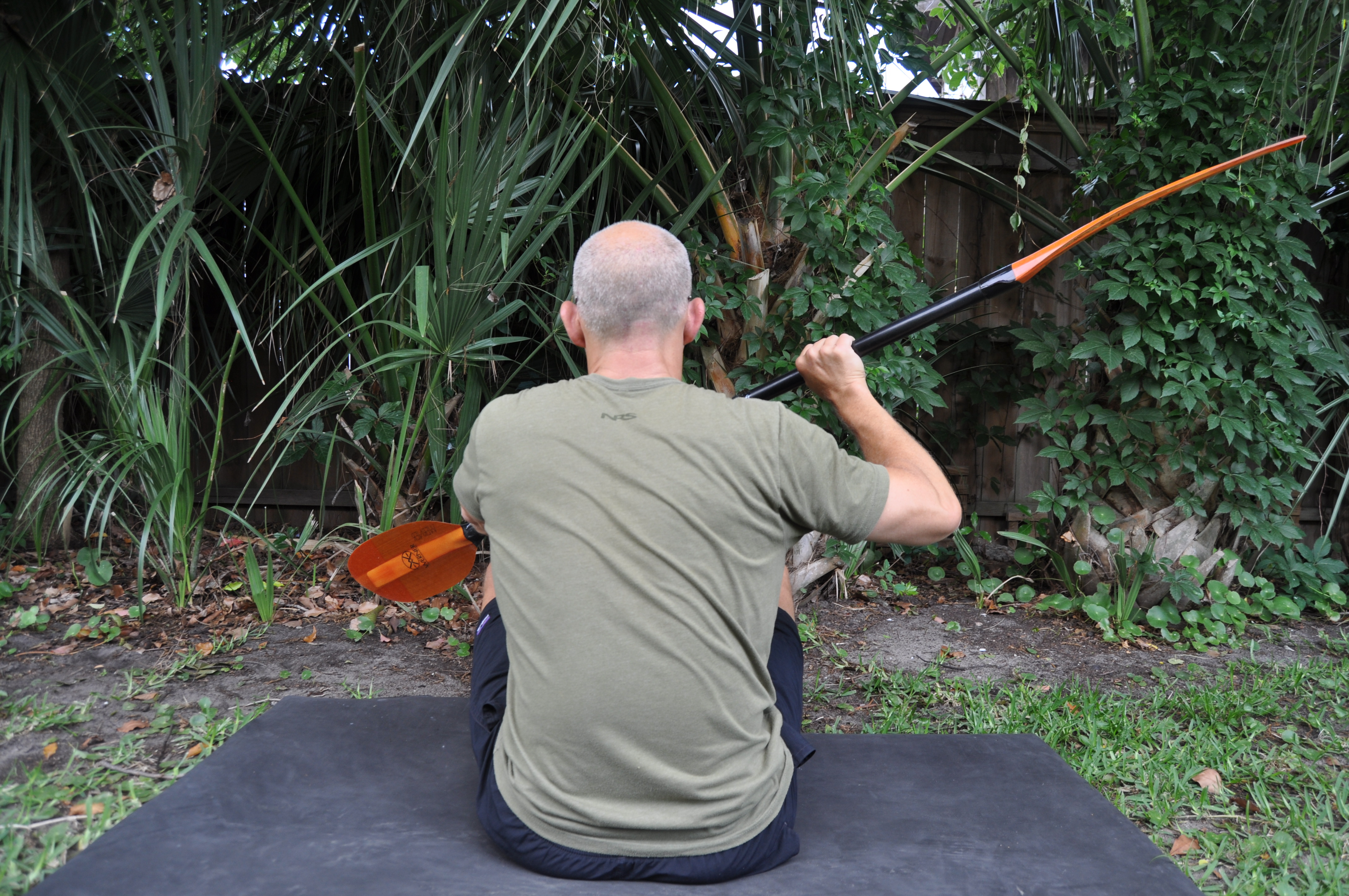
Why not? Well, with a short paddle, once you drop below about 30 degrees of feather, you need to start tweaking your wrist again. Not back like in the old days, but sideways, in an awkward cocked position that invites a repetitive use injury. If a neutral wrist is the best way to avoid tweaking yourself over time, then feather angles below 30 degrees simply don’t work.
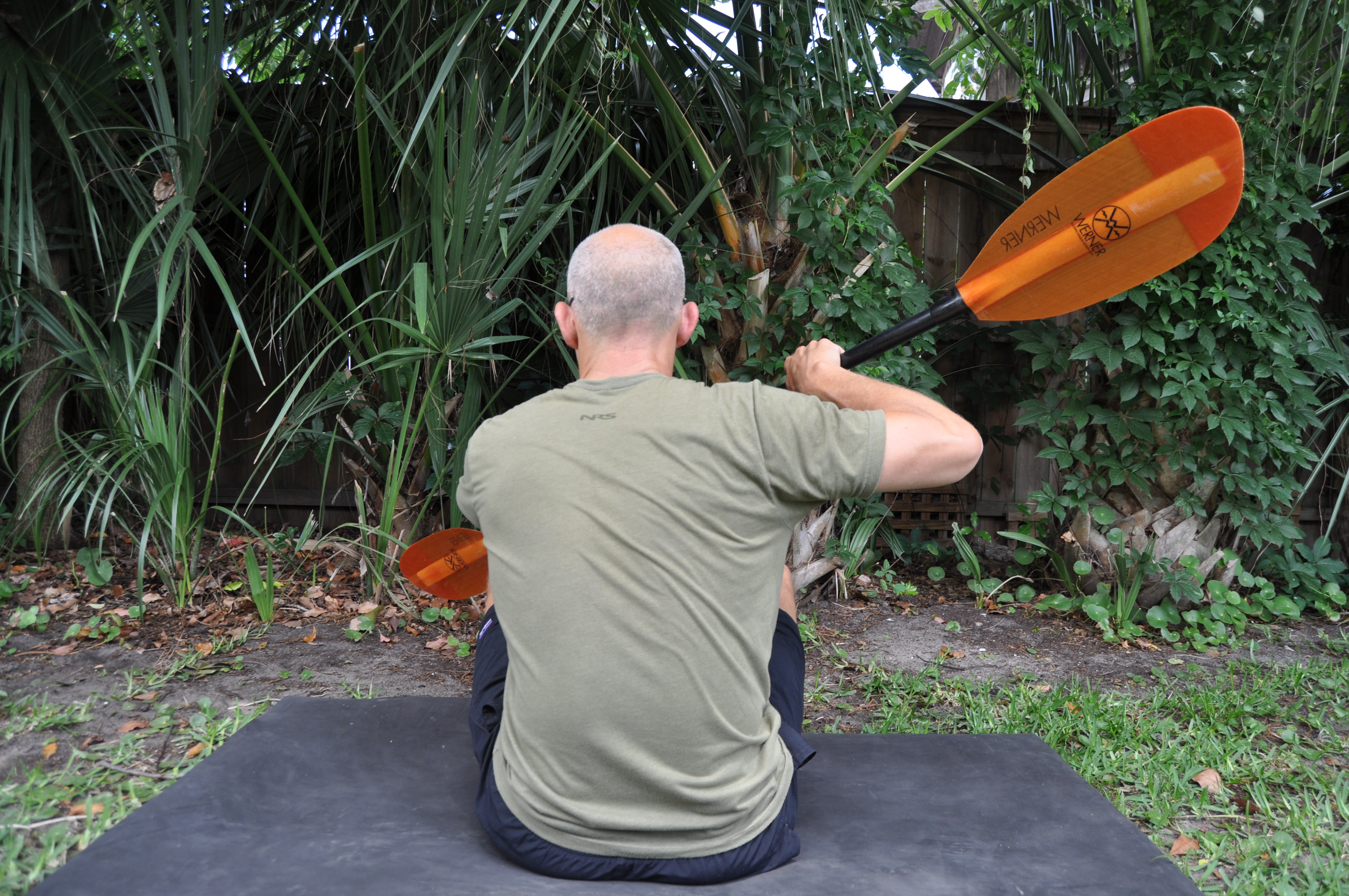
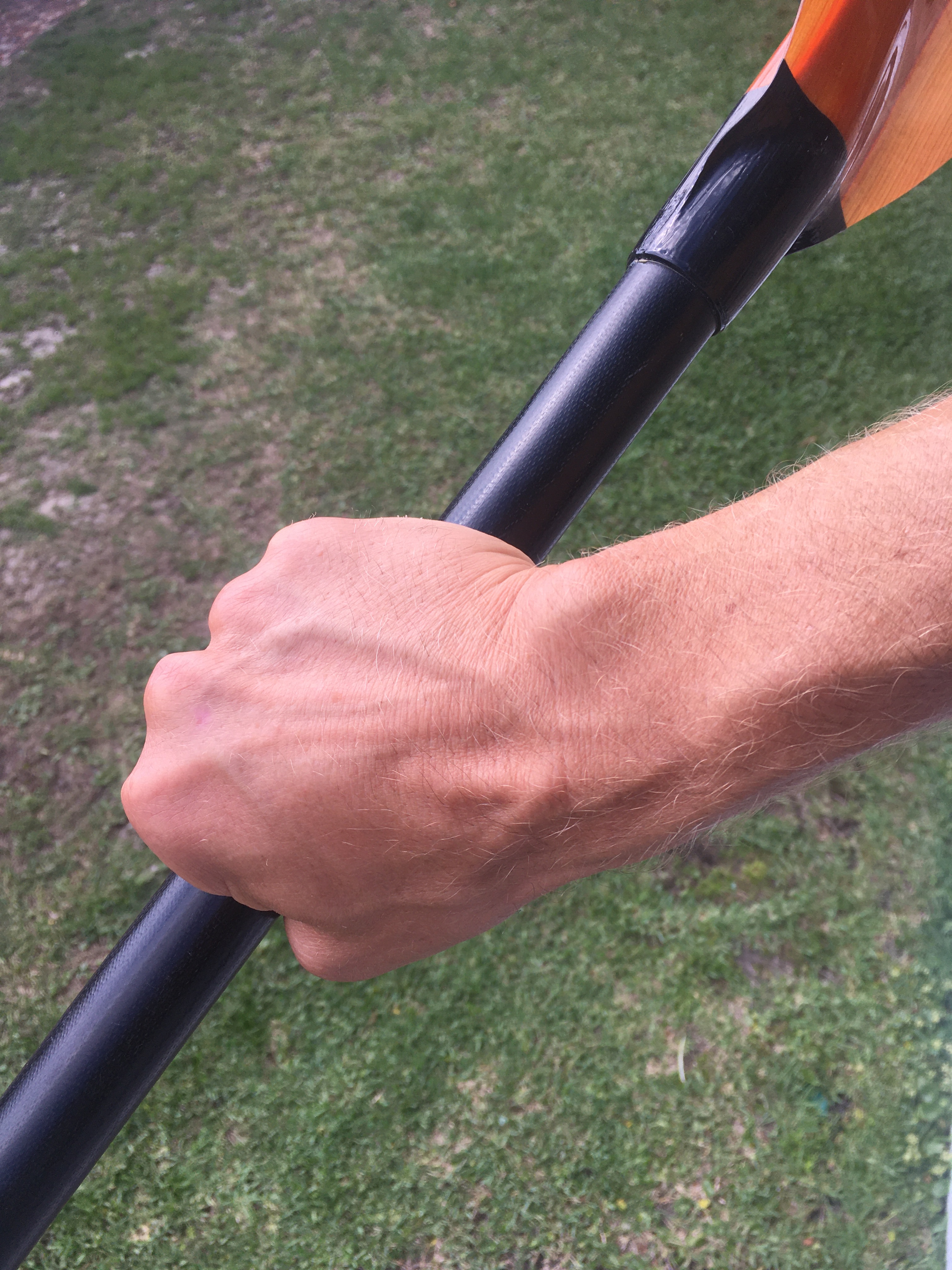
Don’t work, that is, with a short paddle. I’d been using short, feathered touring paddles for years because they were similar to my whitewater paddles, but the Greenland paddles that I used in back in the 90s were long, unfeathered and seemed to work fine. What was the difference?
There’s a meme in the sea kayak world that’s used to describe different forward stroke styles. Paddlers using short paddles are said to use a high angle forward stroke. This stroke has the top hand at shoulder level and is very powerful. It’s the stroke that I use for whitewater and touring and there is no question that it is an effective technique.
That being said, if you’re holding your top hand at shoulder level you engage your shoulder muscles more. This is fatiguing over time, and while you can always buy a lighter paddle, many people prefer to use a lower top hand position that is less powerful, but also less fatiguing. This technique is frequently referred to as a low angle paddling style.
The traditional Greenland style paddling that I experimented with in my 20’s is the ultimate in low angle paddling. The hands are held very low, just above the sprayskirt, and the paddle is long and unfeathered. What you’ll discover about the Greenland forward stroke, should you try it, is that your wrists stay completely straight throughout the stroke. The shoulder, elbow and wrist are aligned differently when the hands are held low. I discovered a similar effect when I experimented with longer modern sea kayak paddles: long unfeathered paddles keep your wrists straight.
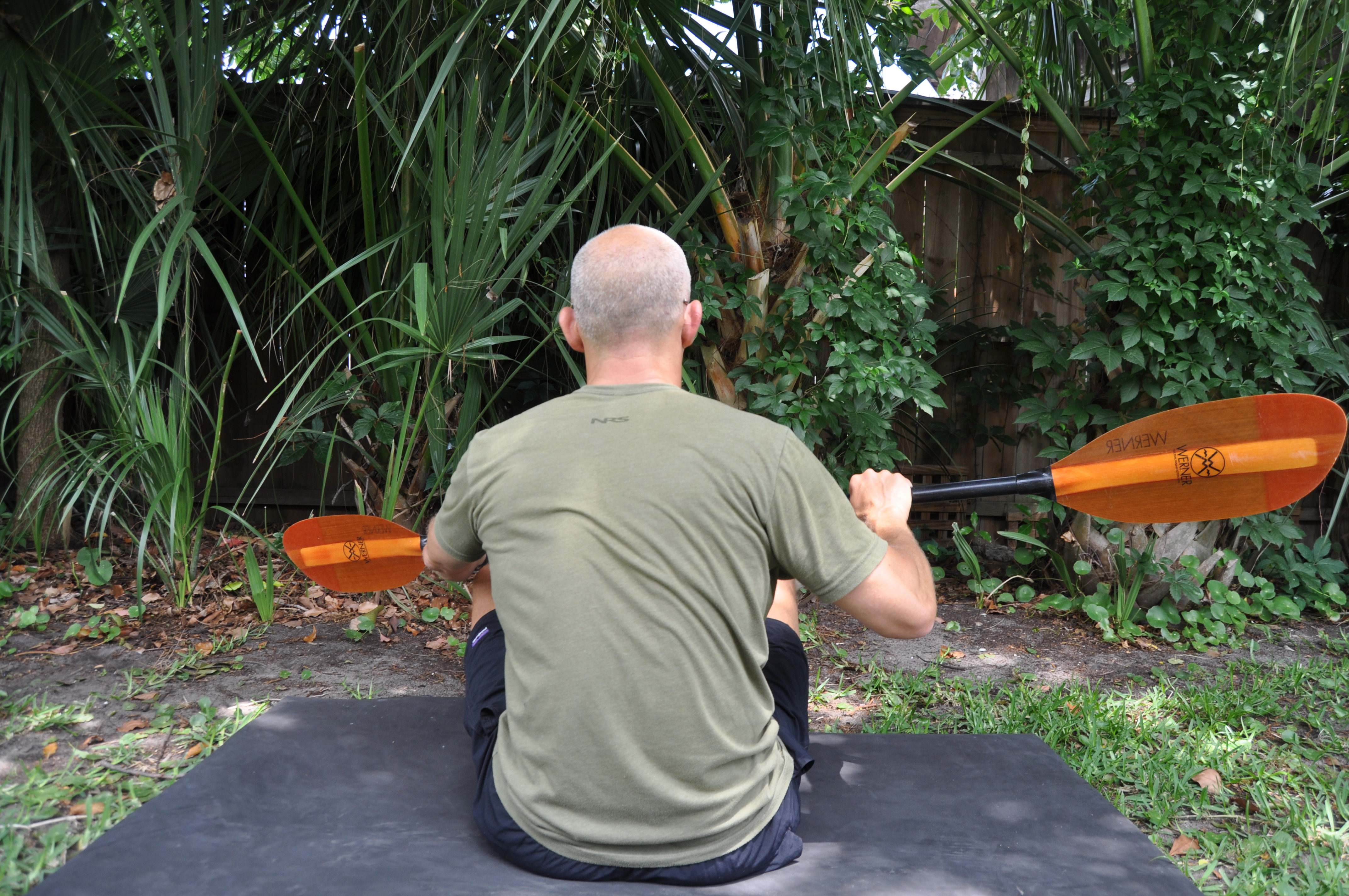
What about long feathered paddles? As it turns out, if you use a long paddle and hold your hands low you need to twist your wrist back with even the slightest feather angles. Long paddles, straight wrists and feather angles, it appears, are completely incompatible. If you go with a long paddle and a low hand position, you’re better off unfeathered.
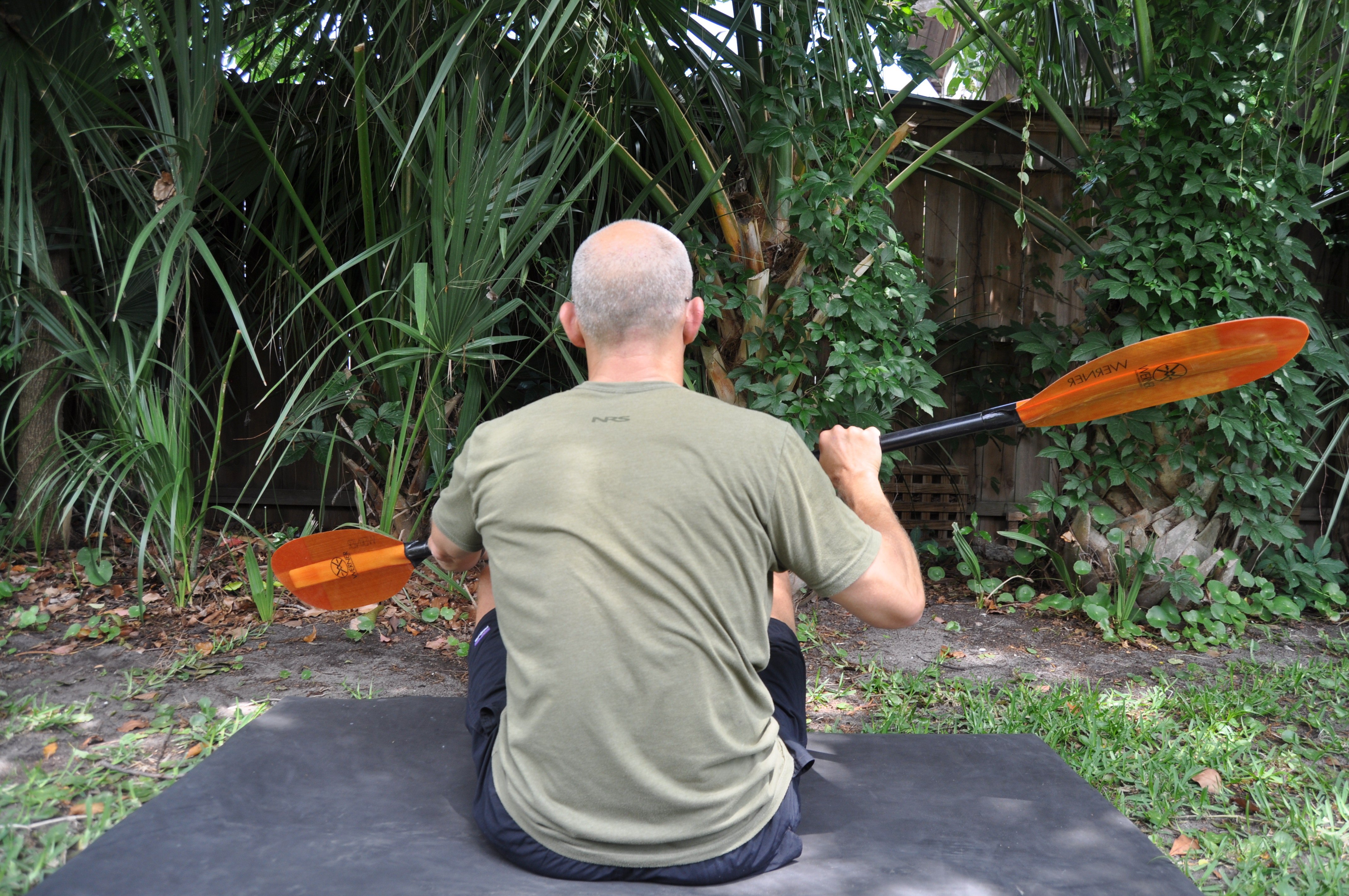
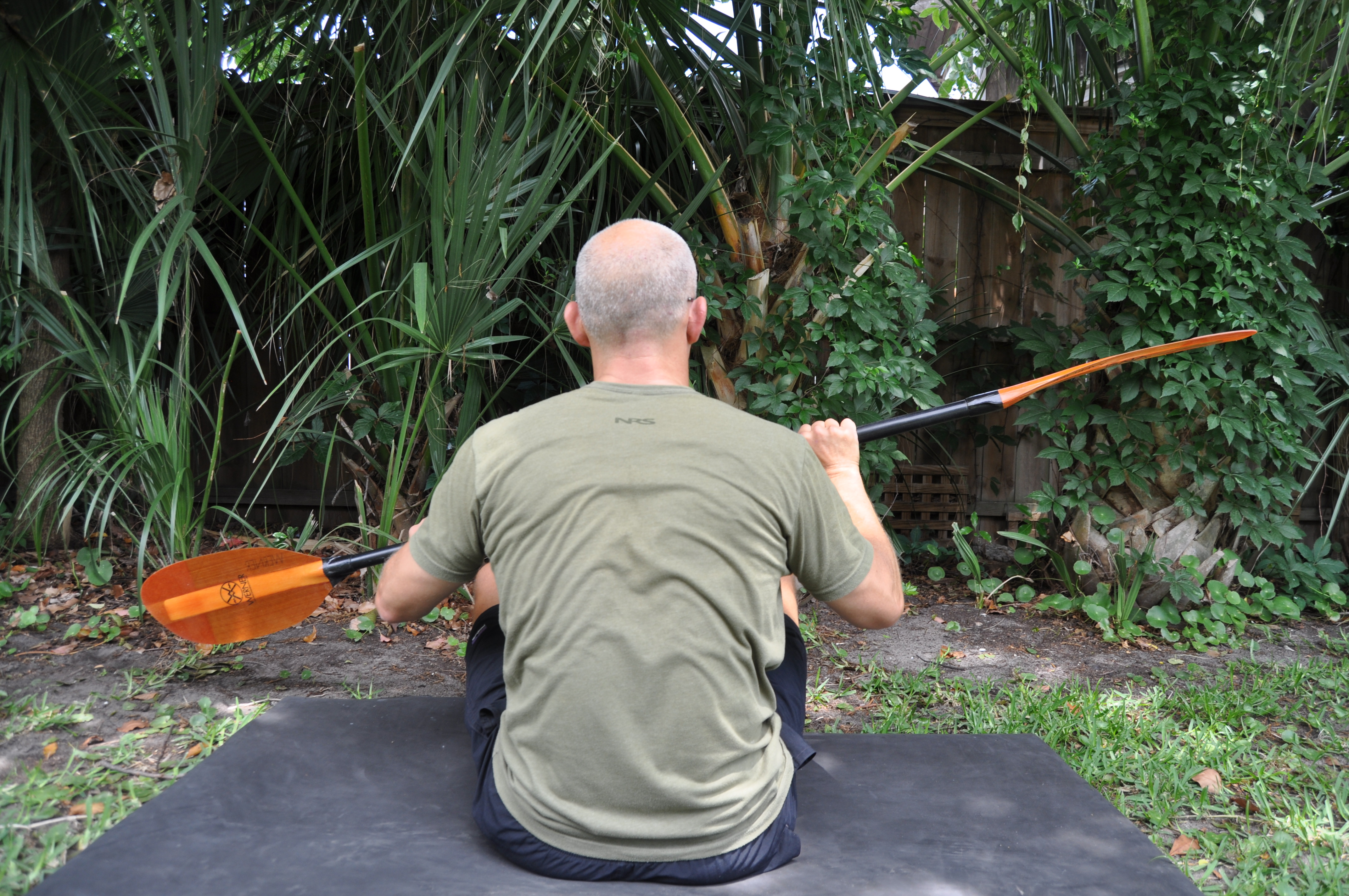
So there you have it. As it turns out, there isn’t one answer to the feathered vs unfeathered argument, there are two. If you want to avoid repetitive use injury you should try to keep your wrists straight during your forward stroke, and there are a couple ways to do it.
Which feather angle is best? Both. If you prefer a short paddle for maximum power you should use a feather angle between 30 and 45 degrees. If you would rather use a long paddle that allows your hands to be held low, an unfeathered paddle will keep your wrists straight. That’s the answer. Keep your wrists straight and keep on paddling. Choose the feather angle that will keep you injury free and kayaking for the long haul.
Here’s a short video walking you through the mechanics of different feather angles:
[UPDATE: A while back, commenter jokingj asked, “Just out of curiosity, how does using a bent “neutral” shaft factor in to the equation?” In my response I said that I didn’t see a lot of difference with respect to feather angle and how neutral your wrist is during the forward stroke. I came to this conclusion based on comparing straight and bent shaft paddles with 45 degree feather angles.
I was wrong.
Yesterday I was out for a paddle down the front side of Little Tybee. On a whim I took along my 2-piece Werner Cyprus instead of the 1-piece 45 degree Saltwood Hustle that has become my everyday favorite. The two-piece paddle gave me that opportunity to play with feather angle and a couple hours into the paddle I decided to bump up to 60 degrees. I spent the next two hours paddling with a 60 degree and, occasionally higher, feather angle and trying to discover if there was any impact on wrist angle. What I learned surprised me.
With a neutral bent shaft you can use up to a 60 degree offset without manipulating your wrist. At 75 and above there is some need to twist the right wrist back to properly plant the blade. But at 60 the wrist is dead neutral.
This discovery makes me think about some of the original arguments in favor of neutral bend and modified crankshaft paddles.
Back in the 2000’s, Lendal modified crankshaft paddles had a reputation for reducing or eliminating wrist and elbow tendonitis. I believe I’ve discovered the reason why. When switching from a 60 degree straight paddle to a 60 degree neutral bent shaft, the paddler goes from needing to twist the wrist back to being able to keep the wrist neutral. This effectively eliminates the repetitive motion that causes wrist and elbow pain.
At any rate, based on a couple hours in the saddle I’m confident to say that a 60 degree feather with a bent shaft is just as neutral as a 45 with a straight shaft.
I’ve long favored neutral bends because they help me with over-gripping in rough water paddling. I try to keep a loose grip on the paddle, but when things get bumpy, I tend to hang on a bit tighter. I’ll now add to this that bent shafts allow me to use a slightly higher feather angle in a touring paddle. Which is an advantage in headwinds.
Guess my old 60 degree Lendal Kinetics are back on the menu!]
If you enjoyed this post, please share it on your favorite social media site using one of the buttons below. If you want to see more, consider subscribing to our website by using one of the links in the menu on the right side of the screen. If you’re on a mobile device you’ll find the Follow button if you scroll down from here. Thanks!
 Kitchi-Gami
Ah yes, I’m currently teaching a 7 year old how to kayak with a 90 degree feather! Beautiful Mitchell Paddle, used by 7 year old me, and made for the paddlemaker’s kid. So perfect size, but man is drilling the muscle memory for the LH rotation… interesting. He’s getting the hang of it and will someday enjoy the righteousness of high-angle/extreme-feather!
Left hand 90! Wow! That’s taking it to the extreme for sure!
Just out of curiosity, how does using a bent “neutral” shaft factor in to the equation? FWIW, I essentially agree with your assessment – i.e. that the angle of attack as well as the length of the paddle determine proper wrist alignment (depending on your type of paddling) – it’s just that the indents in my bent shaft align my wrists a bit differently, which in turn seems to diminish the need for feather by yet another 10-15 degrees. Practically, it means that my 205cm straight shaft surf paddle is 30 degree, while my 210cm bent touring is at 15 degrees.
Anyway, appreciate the post, photos and video.
Thanks for commenting.
I don’t think it really makes a lot of difference. I use neutral bends almost exclusively and notice it there too. I just used that old straight shaft Shuna in the pics because I thought a bent shaft would confuse the issue.
I just grabbed by bent shaft Cyprus and fiddled with angles a little bit. I think you are right. Bent shaft may make a little bit of difference. Maybe 10 degrees or so like you mention. There is a slight change in wrist angle from bent to straight at zero feather.
That said, I like my bents at 30-45 same as straights. And when I switch between bent and straight I don’t notice much difference.
I think the biggest advantage to bent shaft kayak paddles is that they compensate for any tendency to over-grip the paddle in rough conditions. I try to keep an open hand and straight wrist when forward paddling, but when it gets rough I know I hold on a little tighter than is optimal for wrist health. So I paddle bent shaft most of the time. Especially in the rough stuff.
Thanks again for sharing your thoughts on the post.
Brian
Thanks for the response!
👍🏻
I took a squirt boat clinic in 1996 and learned from Jimmy Snyder that 45 was a great way to go. I was convinced and called Werner (we were dealers- Alder Creek) and ordered one. Bruce Werner said “45 degrees????” been hooked ever since. Greenland is another animal.
Hey Steve! Thanks for chiming in. Yeah, old habits die hard. John Regan is still rocking 80+!
Thanks Brian. I really liked the directness with which you handled this thorny subject and I completely agree with all your points.
This is the 2nd or 3rd time I’ve read, and thoroughly enjoyed, your article. Thanks for tackling this tough one. I try for a high stroke with a short paddle and wide grip for surfski paddling on flat water with a Jantex wing blade. I usually set my paddle at approx 65 degrees. I find that my wrists stay straight just fine with this, and I get a decent catch and exit. But, this does require a rotation of the shaft in my left hand after right side exit and before gripping it with the left hand right before the left side catch. This seems like a natural motion to me. I think it gets down to stroke angle, amount of body rotation, forward reach, etc. And my stroke is evolving, so who knows what the future will bring. Thanks again for a great article. I’m keeping it for a few more reads down the road.
Thanks for the kind words! I’m guessing that your wrists stay straight with the wing because of the forward angle of the blade where it meets the shaft. I haven’t spent a lot of time playing with wings so I can’t be sure. Best guess. Thanks for joining the conversation.
B
Sounds to me that just like there is as much difference between a Clydesdale and an Arabian (which will make sense to anyone who knows horses as well as paddling), as there is between human beings who are configured differently. So, my guess is that what is most “ergonomically efficient” for one individual may cause repetitive stress injury in another. For example, Brian appears to be a 6′ male, whereas I am a 5′ female. I started out paddling with a heavy entry-level paddle (which was heavier than a Clydesdale, by the way) which resulted in sore shoulders and wrists from even a short paddle. Then I switched to a beautiful Werner bent-shaft carbon fibre paddle that I tried with different feather angles and eventually settled on “ZERO” feather and have been a fast ‘n happy paddler ever since, with no shoulder or wrist strain, at all, even from a 40-km solo paddle. In other words, I strongly suspect that we might all choose to try out different paddles with different feather angles and see what works best for each one of us, just as Brian did, as what works best for him and a lot of other large men who are similarly configured might not work quite as well for a small but determined woman trying to keep up to him on the water!?#@!
Thanks for commenting. Of course individuals are different in many ways that impact comfort and preferences for equipment. Torso height is a huge factor in both boat and paddle fit and the same length paddle will feel radically different in the hands of a 5 foot tall person vs someone a foot taller.
I do maintain that regardless of paddler height, the wrist is in a more or less neutral position based on how high the top hand is held during forward paddling. A zero feather is more neutral when the top hand is held below the shoulder. A 30-45 is more neutral when the top hand is at shoulder level.
Of course, experimentation is the best way to learn what’s best for anyone. And life is too short to use a heavy paddle regardless of what feather angle you eventually come to prefer!
Thanks again for being part of the conversation.
Brian