
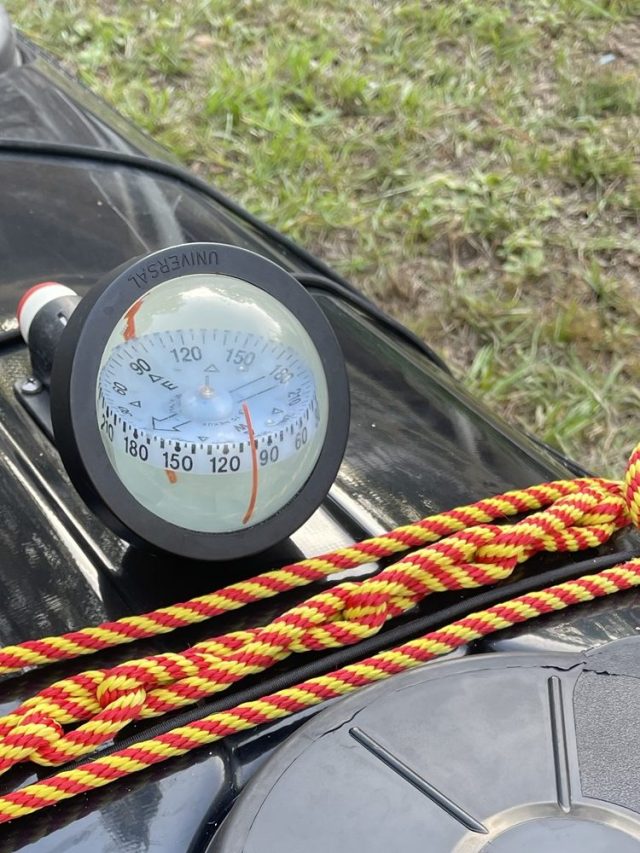
The best sea kayak compass that you’ve never heard of.
If you’re serious about sea kayaking, sooner or later you’ll need a compass.
That’s not to say that you ALWAYS need a compass. A lot of the time you don’t. Most of the navigation that we do from the seat of a sea kayak is simple piloting: keeping track of our location by comparing what we see on shore with what’s printed on our chart. As long as you can see shore or aids to navigation like buoys and daymarks, you can find your way quite nicely with just a chart.
But sometimes we can’t see shore. With more ambitious kayaking adventures come more challenging conditions. Paddling in the dark. The fog. Crossing to an island that’s over the horizon. All of these require being able to calculate and follow a compass course.
The kind of compass that we use for this sort of navigation is a nautical binnacle compass. Unlike a hiking compass, nautical compasses are designed so that the number you view on the compass card is the direction that you’re travelling. This makes it easy to stay on the proper heading by glancing down at the compass from time to time.
In the early days of sea kayaking there was quite a bit of variation in what kind of compass people preferred. Different manufacturers favored different compasses and designed their kayaks with mounting recesses on the front deck to accommodate their preferred choice. With the rise of popularity of British sea kayak designs since the 1990’s much of that variation has declined. These days, many sea kayaks come with an angled compass recess positioned well forward on the kayak near the bow. Almost all of these compass recesses are intended to take the Silva (or Nexus or Brunton) 70P Compass.
[A notable exception to this rule are the Current Designs Danish kayaks, which use a similar recess that accepts the Richie V-527 Dash compass.]
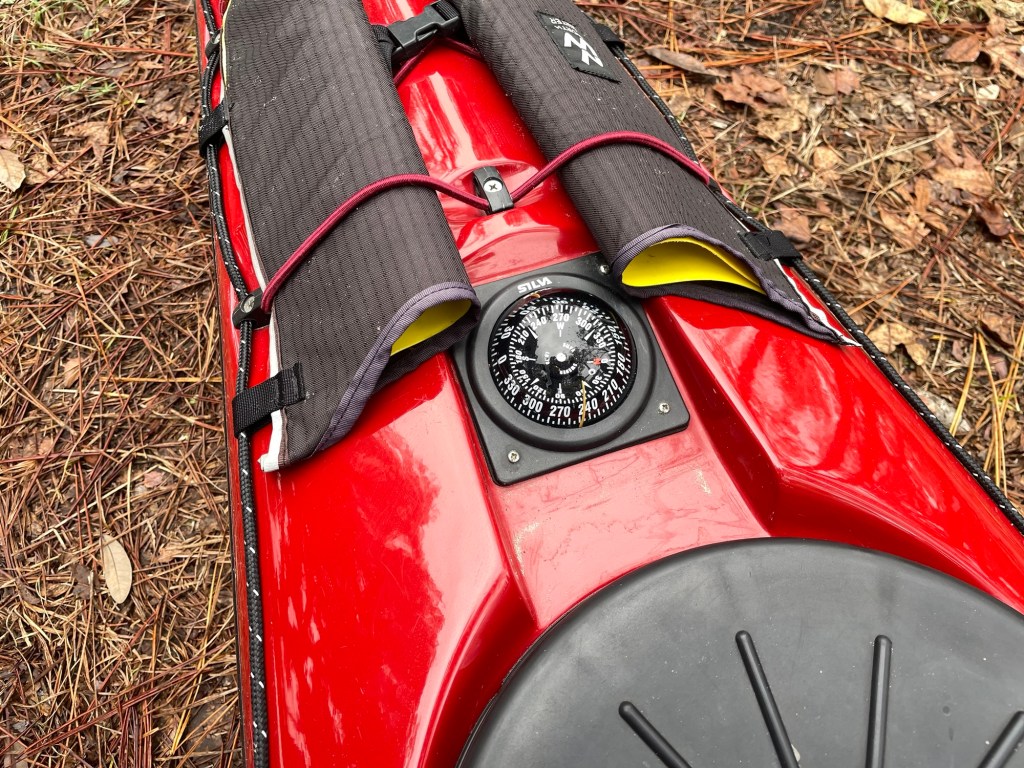
Mounting the compass ahead of the front hatch offers some advantages, most significantly that you don’t have to drop your eyes very far from the horizon to see the compass. This can help to prevent motion sickness in low light conditions. Which is a big deal. Being sea sick in a sea kayak is debilitating. If you get sick enough, you’ll need a tow, and another kayak to lean on. Not fun.
That said, mounting the compass so far forward on the kayak has some disadvantages as well. First off, it can be difficult to read. Those of use who’ve made a few cycles around the sun will find ourselves squinting to read the card mounted waaaay up there. This is made even more challenging once a few water droplets find their way onto the dome of the compass. And with the compass so far away, there’s no practical way to wipe those droplets off.
Next, it’s hard to light a 70P. If you’re going to use one in the dark, you’ll need to figure out some kind of way to illuminate it. Which probably involves taping a glow stick or flashlight to the deck in a way that illuminates the compass without blinding the paddler. There used to be a special hood available for these compasses that took a tiny chemlight stick, but I haven’t seen any of them in years. These days you probably have to wing it.
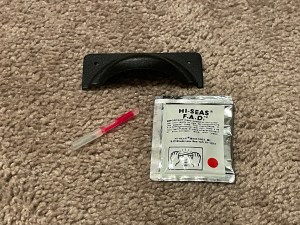
Then there’s the damage problem. Permanently mounting the compass on the bow of your sea kayak leaves it exposed to UV and all the bumps and knocks that come from paddling and handling kayaks. After a few years of this the fluid inside the compass will begin to darken, making it even more difficult to read. The only solution to this is to replace the compass. Not ideal given the cost of these things.
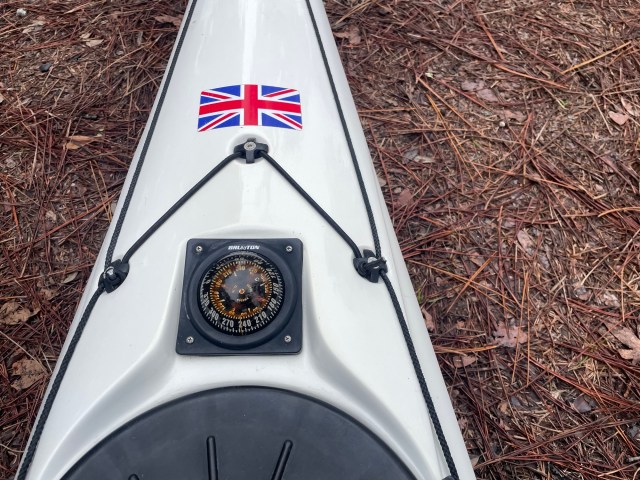
Which brings me to the 70 UNE.
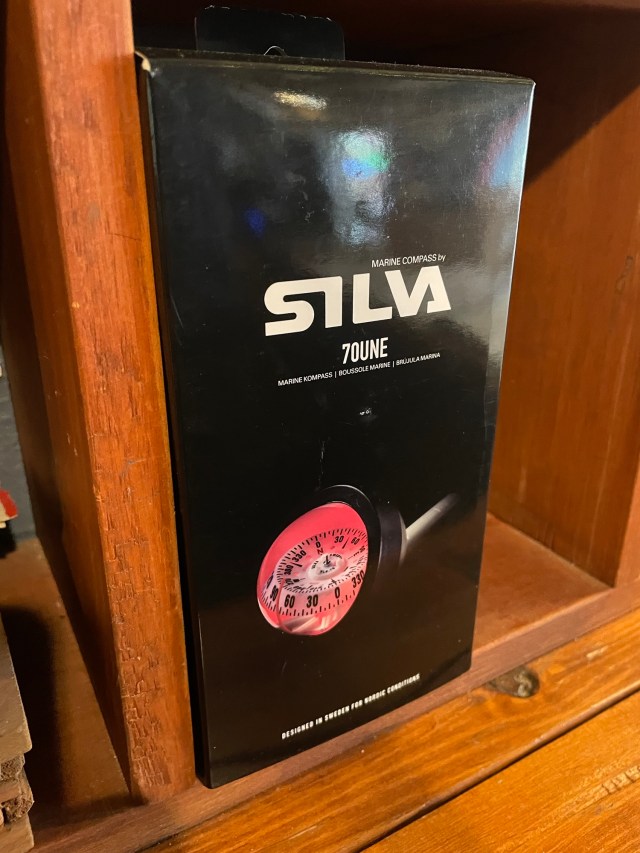
The 70 UNE is a universal fit, removable version of the 70P compass. What’s more, it’s lighted.
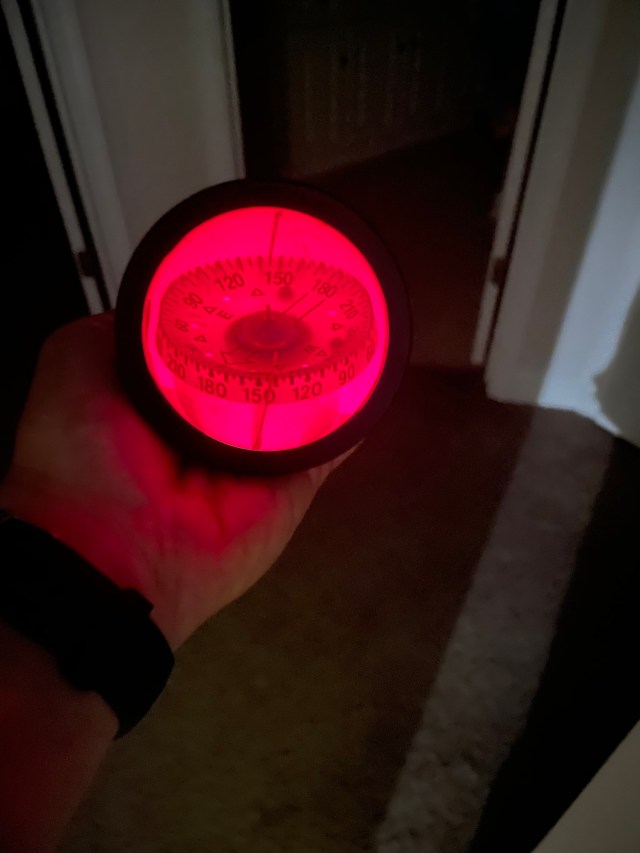
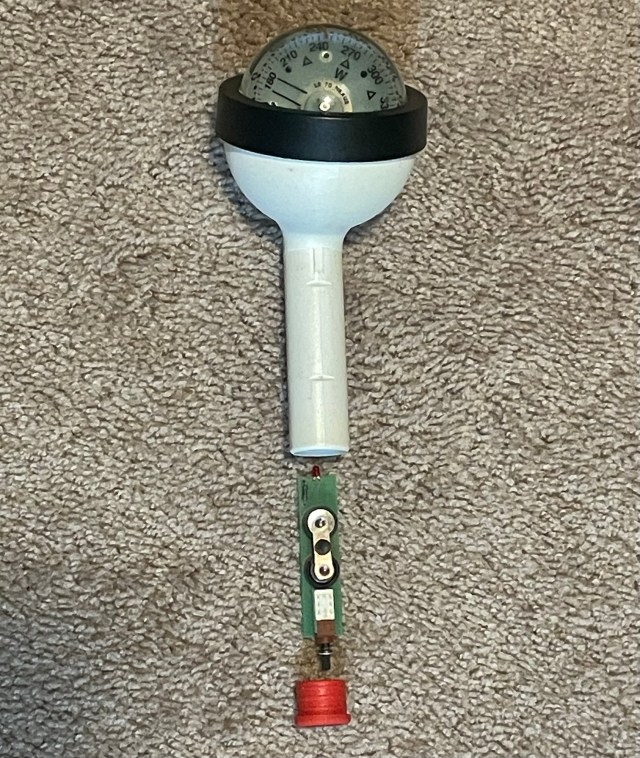
The UNE has a small LED insert that runs on two watch batteries. The insert slides into the stem of the compass and is sealed with a waterproof rubber cap. Pressing on the cap activates the switch that turns on the light.
The 70 UNE mounts to the kayak with a U-shaped bracket that holds it firmly in place. When not in use it can be safely stored away in a drybag. This protects the compass from UV or damage during rescues or transport.
The removable feature of the UNE also makes is easy to use as a handheld bearing compass. Trying to triangulate your position using landmarks? With a permanently mounted compass you need to turn your kayak until it points at the landmark before you can read the bearing. With the UNE you just pull it off the deck and shoot the bearing.
What happens if you drop it in the water?
It floats.
Let’s recap. The 70 UNE compass…
Mounts close enough to the cockpit that you can easily read the card and wipe water droplets off the dome.
Is illuminated for night paddling.
Can be removed when not in use.
Can be used as a handheld bearing compass.
Fits on any kayak.
Floats.
All this at about ten bucks more than the 70P.
What’s not to like?
The only possible criticism of this compass that I can come up with, other than mounting it close to the cockpit might increase the chance of motion sickness, is that it’s funny looking.
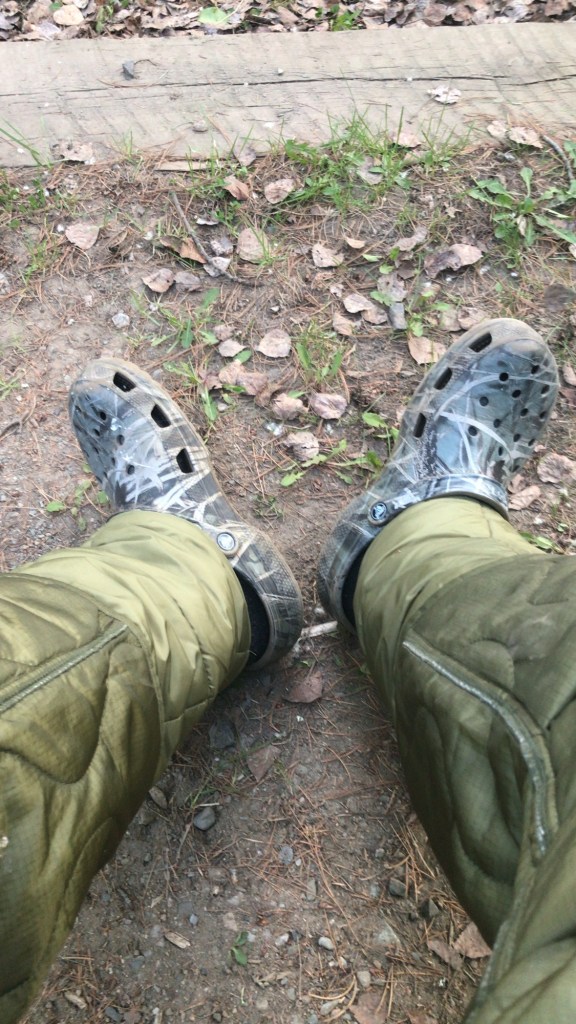
I get that. The 70 UNE is the Crocs of the compass world. It’s a bit dorky.
But it sure is practical…
If you enjoyed this post, please consider subscribing to Kitchi-Gami.com by using one of the links in the menu on the right side of the screen. On your mobile device you’ll find the links if you scroll to the bottom of the page. Thanks!
 Kitchi-Gami