

If it’s good, they’ll get rid of it.
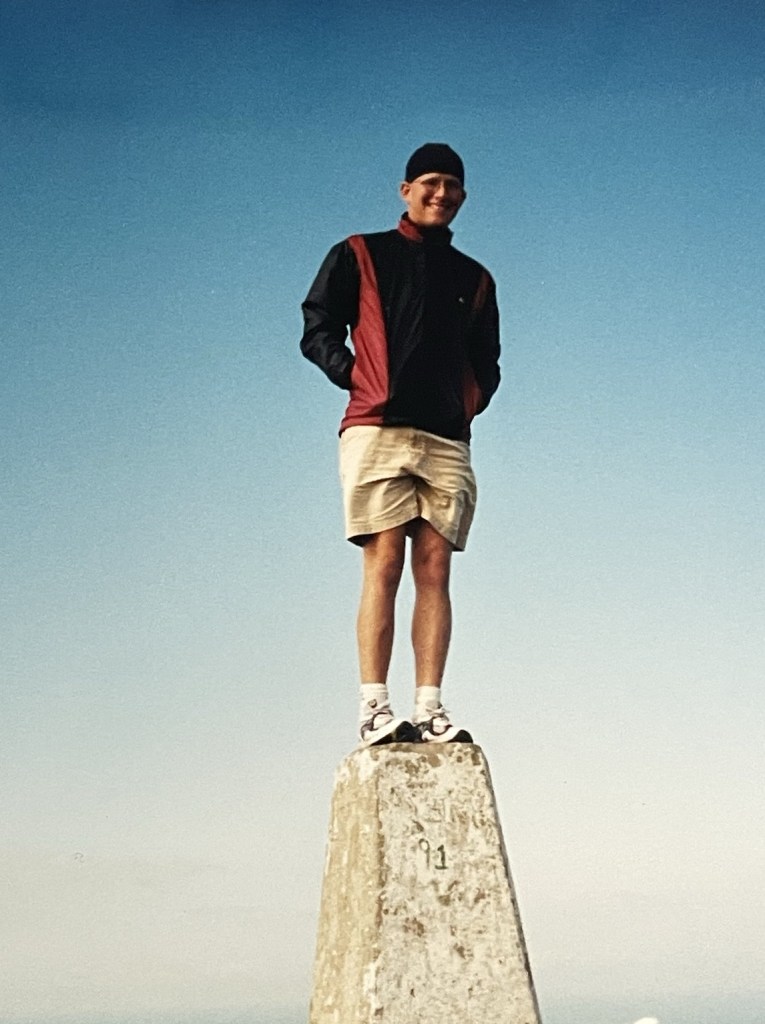
Outdoor companies have a tendency to eliminate some of the best products ever made. Trends come and go, and products go with them. Even if those products are exceptional.
I think mostly this happens because the people running these companies don’t properly understand what they have their hands on. Sure, they’ve developed the product, and had a design intent, and marketed it to fill that niche. But they haven’t realized what the product is REALLY good for.
Take Patagonia Silkweight Capilene as an example. With Silkweight, Patagonia had created the absolute most versatile baselayer that had ever hit the market. Silkweight is the perfect foundation for any outdoor activity, regardless of the season. It dries faster and wicks better than anything else out there. In fact, it makes all of Patagonia’s other Capeline products obsolete. So what does Patagonia do? Pigeonholes it as hot weather wear to the point that it languishes in the line. Then they decide to discontinue the bottoms. Criminal.
They could have positioned Silkweight as the One Baselayer to Rule Them All. But they didn’t. So it didn’t sell. And now we can’t get bottoms.
This is why we can’t have nice things.
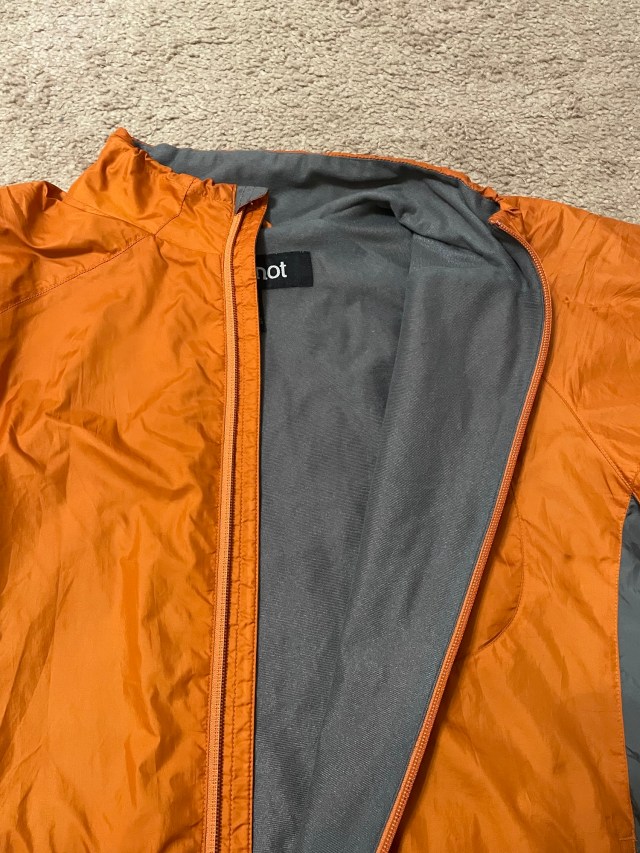
The Marmot DriClime Windshirt is a prime example of a product that was exceptional in performance but deeply misunderstood.
Take a look at this Gear Lab review of the Windshirt. It gets middling marks as a running jacket.
A running jacket. Designed to bridge the gap between soft shells and lightweight insulated jackets.
Presumably, that’s how Marmot was positioning it in their product lineup.
And if this your expectation for this garment, you are absolutely going to be disappointed.
Because that’s not REALLY what the DriClime Windshirt is.
The DriClime Windshirt doesn’t bridge the gap between soft shell and lightweight insulation. It replaces lightweight insulation. It is a lightweight fleece equivalent that is lighter, more wind resistant, better in a layering system and arguably superior to the best lightweight fleece available.

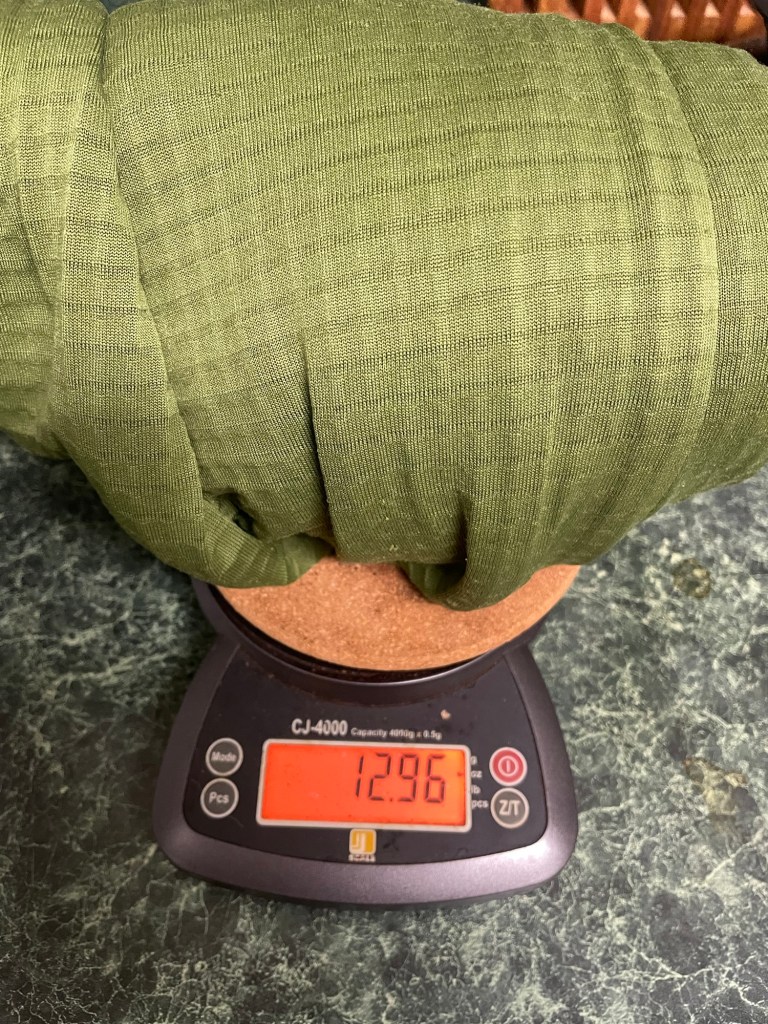
I discussed the role of lightweight fleece in this post. The best of lightweight fleece works in conjunction with your baselayer to wick moisture away from your skin and toward the outside of your clothing system. Grid fleece like Patagonia R-1 (Polartec Power Grid) is outstanding at wicking while being both lightweight and compressible.
A good lightweight fleece layer works to move moisture out of your baselayer and spread it over a larger surface area so that body heat can drive it toward the outside of your clothing system where it can evaporate without cooling your body.
The DriClime Windshirt does this. And is wind resistant in a way that fleece can never be.
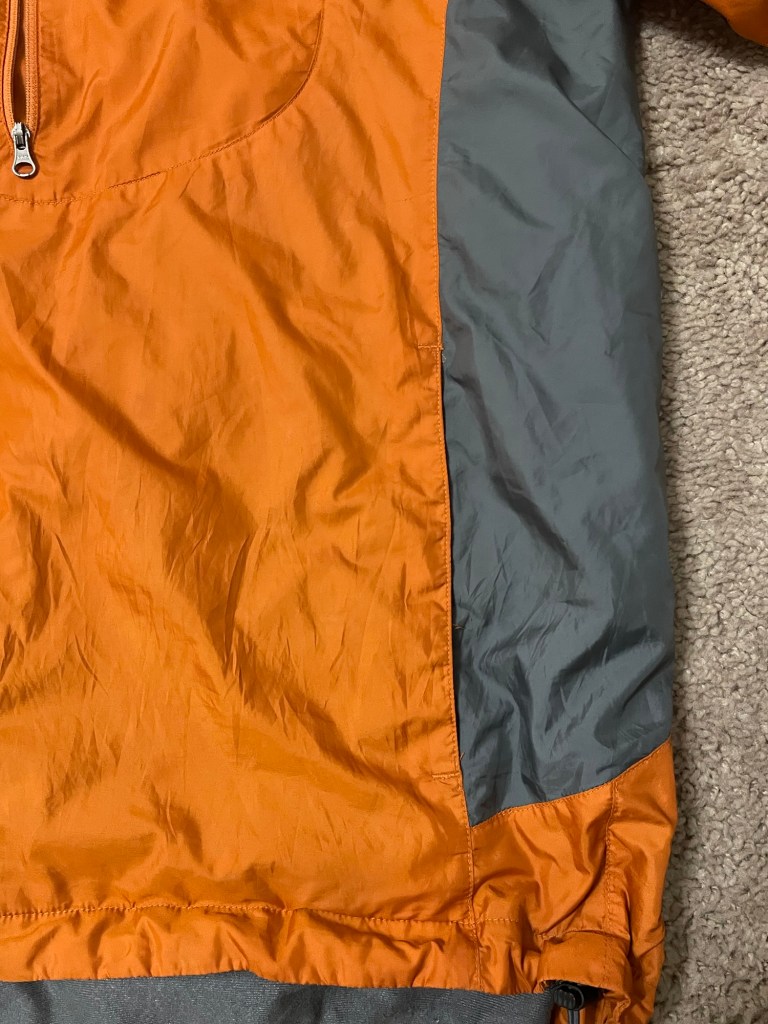
What is DriClime?
Marmot describes DriClime as a wicking fabric that’s woven from different denier yarns. The outer surface of the fabric has more surface area that the inner surface, which causes moisture to be mechanically wicked from the inside to the outside of the fabric. In this way it is similar in function to bi-component knits like Polartec Power Dry, which are discussed in detail in this post.
DriClime is a a polyester tricot knit. Which means a couple things. First, tricot fabrics have a soft, fuzzy hand that feels like flannel. They’re very comfortable next to your skin and offer a bit of insulation. Second, and more importantly, polyester is a hydrophobic (water hating) fiber that is quick to dry. Polyester fibers are so hydrophobic that they need to be mechanically altered before they can be woven into wicking fabrics.
Milliken was the first company to develop a process for permanently etching polyester fibers so that they would move moisture through a sort of capillary action. These Milliken fabrics formed the basis of Patagonia’s Capeline line of baselayers.
With DriClime you get polyester wicking fibers of different sizes woven into a warm, mechanically wicking bi-component fabric that moves perspiration away from your skin. And in the case of the Windshirt, that fabric is shielded inside a wind-resistant polyester shell.
The shell really is the key part. On it’s own, DriClime fabric wouldn’t offer much insulation. But stitched inside that lightweight shell it punches well above its weight.
The shell creates a microclimate within the jacket that increases the warmth of the DriClime lining without adding bulk or weight. The shell is air-permeable, which means a stiff wind will blow through the fabric. This is a feature, not a bug, because a certain amount of air permeability helps evaporate moisture out of the clothing system. This is discussed at length in these posts on soft shells and wind shells if you’re interested in a deeper dive.
The slippery outer shell of the Windshirt slides smoothly under any shell worn over it, whether it be a waterproof hardshell or a stretchy soft shell. Which makes it excellent within a layering system.
The combination of an air permeable shell with a lightweight wicking fabric makes the DriClime Windshirt similar to active insulation garments made from materials like Polartec Alpha, Toray Full Range or Primaloft Silver. Albeit in a much lighter form.
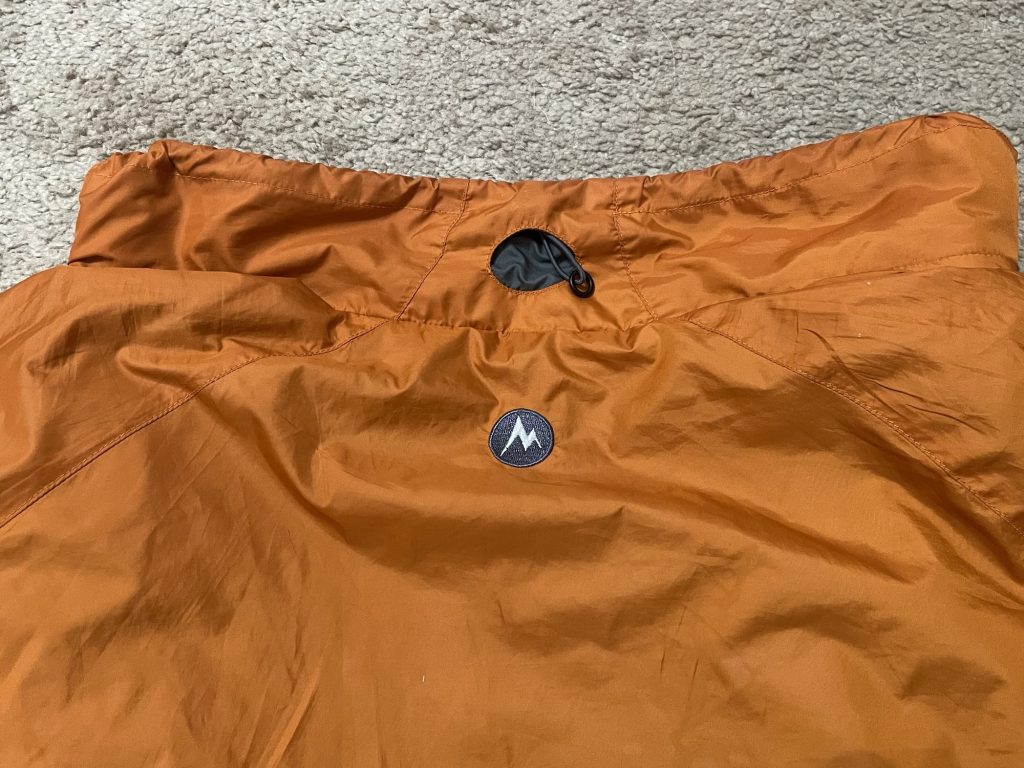
Performance
I went years without having a DriClime Windshirt. Honestly, I have no idea what happened to my old one. It disappeared sometime in the past 20 years and was never replaced. This spring, in a fit of nostalgia, I decided to track one down. EBay to the rescue.
I’ve been wearing the jacket off and on this fall and and thinking about how it fits into the context of the Simple Clothing System. It’s usually worn over a silkweight t-shirt. Often on urban hikes with a weighted pack. Worn this way, the Windshirt is comfortably warm down to freezing. These are conditions that I would typically wear lightweight fleece in, and I believe the Windshirt is every bit as warm.
I’ve also worn the Windshirt in warmer, rainy conditions. Drizzle and 40 degrees or so. The shell gets wet and the DriClime liner gets damp, but it remains warm and about as comfortable as can be expected. Warmer than a silkweight top and windbreaker would be in similar circumstances. And more comfortable than a hard shell waterproof-breathable jacket over silkweight. A good solution for ugly, damp weather.
If the wind picks up, the Windshirt has you covered. This morning’s dog walk was 25 degrees with a stiff north wind gusting to 20mph. I wore the wind shirt over a silkweight Capeline top and kept a brisk pace with a weighted pack. I was comfortably warm in these conditions. The tightly woven polyester shell fabric blocked the wind and trapped a warm layer of air inside the jacket, and the Capeline and DriClime liner worked together to move perspiration away from my skin.
How about stench? Not bad. Worn over a baselayer, DriClime doesn’t get particularly stinky. It isn’t as odor resistant as some of the newer fabrics with anti-microbial treatments, but it doesn’t turn immediately rank with use. About on par with polyester fleece.
Features
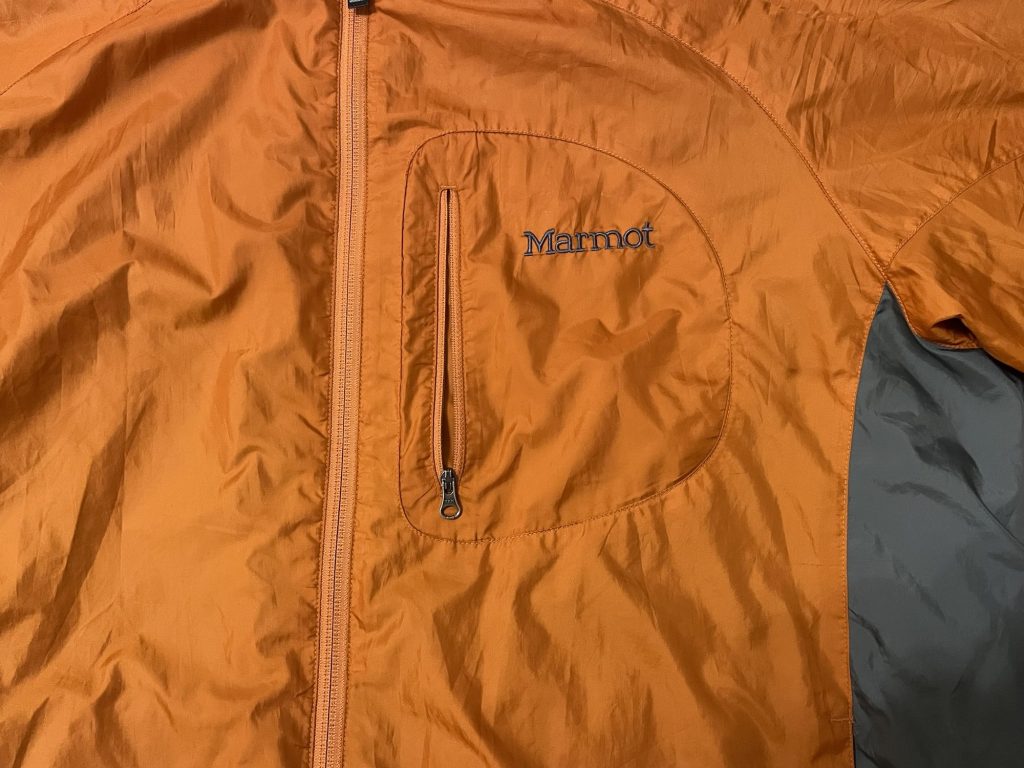
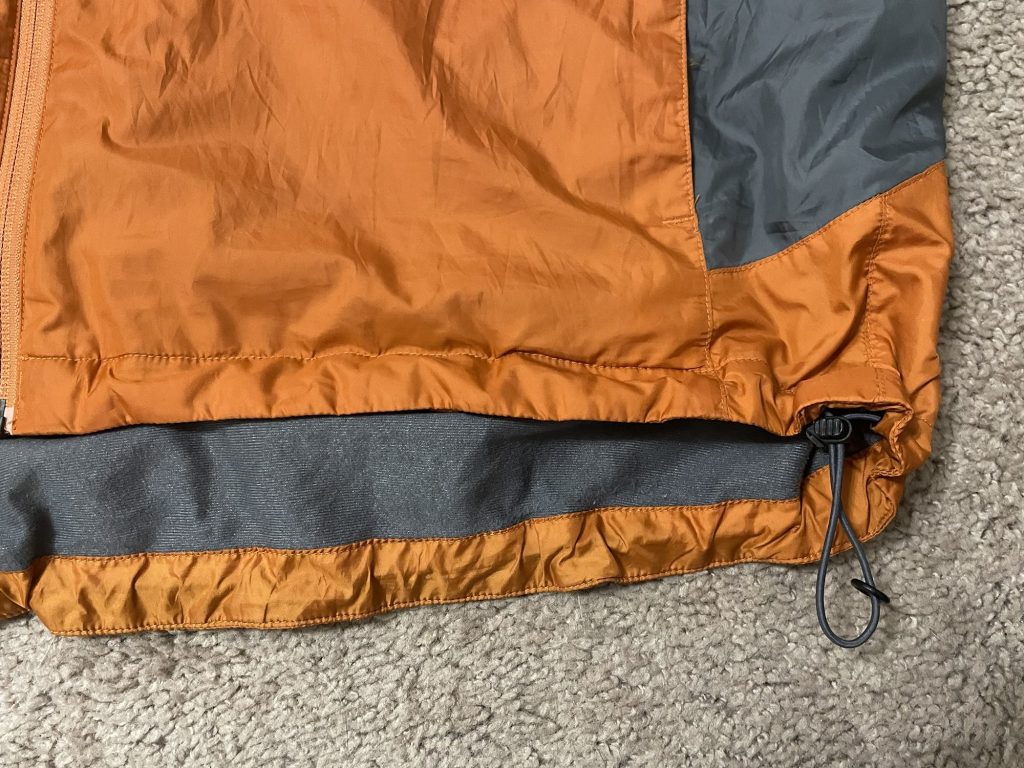
The DriClime Windshirt has a simple feature set. Elastic drawcords at the neck and hem to seal in warmth, elastic cuffs at the wrists, a zippered chest pocket, and a pair of DriClime lined handwarmer pockets. My only complaint is that these pockets don’t zip shut, so they’re only useful for warming hands and can’t be trusted with gloves or keys. Zippers would make them better, at the cost of added weight.
Conclusion
So, what is the DriClime Windshirt? And where does it fit in an outdoor clothing system? I think it’s best seen not as a light jacket for aerobic activities like running, but rather as a replacement for lightweight fleece within a layering system. Or as a standalone garment that fills the role of both a lightweight fleece and wind shell.
Think of it as a lighter weight version of the active insulation garments that have become popular over the past ten years. Something like a Patagonia Nano Air jacket with a little less warmth and bulk. A “proto-Nano” that uses older technologies but achieves similar performance.
What’s more, unlike active insulation garments, the Windshirt also wicks moisture, which makes it perform more like lightweight grid fleece or Power Stretch. This makes it extremely functional as an intermediate layer within a clothing system. Especially when worn over a wicking baselayer.
It’s a real category buster.
I think that’s the problem with the Windshirt, and explains why it eventually fell out of favor. It doesn’t fit neatly into the categories of outdoor clothing that are most actively promoted and purchased. It’s warm, it’s wind resistant, it wicks moisture. What is it? Insulation? Shell? Base layer?
Yes. The Windshirt is all of these, and the sum of it’s performance exceeds its component parts.
And, it’s discontinued.
Maybe Marmot will bring the Windshirt back. Maybe another company will introduce a similar jacket.
Until then, there is always eBay.
If you enjoyed this post, please consider subscribing to Kitchi-Gami.com by using one of the links in the menu on the right side of the screen. On your mobile device you’ll find the links if you scroll to the bottom of the page. Thanks!
 Kitchi-Gami
Hi Brian,
Great writeup of an enigmatic product. I got my DriClime in the late ‘90s – red/black (Marmot still in their “black shoulders” era) because that’s what Jeff Lowe wore for the technique photos in his climbing book Ice World. I wore it on a Bolivian climbing trip. With a midweight base layer underneath it was comfortable for climbing unless the wind really kicked up. I wore it on several backpacking trips, most notably hiking the Wonderland Trail around Mt. Rainier. And for years it was a staple midlayer in my ice climbing clothes.
Some notes. My earlier-gen version has a minimal feature set – no bottom-hem drawcord (a major failing in my view, single pocket left chest, stout toothed zipper, mid-high collar that doesn’t fit closely around my neck. The shell material doesn’t feel very air-permeable; perhaps they changed that in later versions. There’s a much more open circle of ventilating fabric in each armpit, presumably to vent air.
Hard to characterize, as you note. Not especially warm as a mid layer under a shell, but infinitely more protective than any fleece piece used on its own, working on the principle that adding wind protection always helps, even if it doesn’t feel especially windy. I will say that the DriClime is warmer as a mid layer than I expect based on its thickness. I think you hit it: Marmot invented the first “active insulation”. Last year Black Diamond went down a similar design path with a version of their Alpine Start windshirt insulated with Polartec Alpha Direct. Much warmer than a DriClime obviously, but similar concept.
Now I have to go hit Ebay….
>
Yes! I remember that version. With mesh under the arms? The version I have is much warmer because of the closures.
Oh, and you’re dead on about Patagonia’s Silkweight Capilene. The early version were lovely stuff – light, fast-drying, wicked moisture, even gave some sun protection. The lightweight Cap was better wicking and faster drying IMO, but Silkweight was far more versatile. If you’re gonna have only one… Somewhere Patagonia lost the plot. The last Silkweight shirt I got was an AAC-branded shirt. I swear the fabric has lycra in it. Lycra. In a base layer. I’m a Pata fanboy, but sometimes they do go off the rails…
>
They’re too committed to having a range of baselayers at various price points so people think they need to buy them all.
Agreed. Lycra in a baselayer (nylon, hydrophilic) is beyond dumb.
I agree. I love my old Driclime Windshirt. It’s perfect for all kinds of outdoor activities, but bicycling in it was my favorite due to the mesh underarms. Wish they’d made it in solid red, solid gray, or solid navy. Backpacker Magazine gave it their Gold award for good reason. I hope Marmot brings it back too, ideally with a two-way zipper. I didn’t love the elastic neck, which is why I kept to the Windshirt, rather than going with the Ether, which had the advantage of hand pockets.
I’m keeping a lookout for one in a more subdued color like green or black. They’re out there.
This is one of the best jackets that was ever made. I still have one, but it’s on its last legs. I’m going to miss it when it becomes so worn that patching it isn’t worth it anymore.
Grab one on eBay! Just saw a couple larges come up.